




Websites
No matter where you are in your GVHD journey
WE HAVE RESOURCES THAT CAN HELPWE HAVE RESOURCESTHAT CAN HELP
Learn about treatment options, better understand your condition, and advocate for yourself and others


GET STARTED HERE
You can learn more about monitoring GVHD symptoms by selecting that topic from the menu below. There are other topics you may find helpful as well. Not seeing what you're looking for? Check out GVHD Alliance–approved resources here.
Select any tab to see more.
Monitoring GVHD Symptoms

Monitoring GVHD Symptoms
Finding a Doctor for GVHD

Finding a Doctor for GVHD
Exploring Clinical Studies

Exploring Clinical Studies
EMOTIONAL HEALTH AND SUPPORT GROUPS
SURVIVORSHIP PROGRAM 
Find free support and services for after your (or your loved one’s) transplant.
MY NMDP
Use this app to connect with the transplant community, track your symptoms, and more.
Connecting Patients Through Cancer Buddy Support
The National Bone Marrow Transplant Link (nbmtLINK) Cancer Buddy Support Group offers bone marrow, stem cell, and CAR-T recipients—along with their caregivers and families—a space to receive emotional support, share experiences, and access practical resources through peer connections. The program includes a dedicated GVHD subgroup, led by Jennifer Gillette, providing tailored guidance and a supportive community for those navigating the complexities of GVHD.
CARING CONNECTIONS 
One-on-one phone support from survivors and caregivers
GVHD SUPPORT GROUPS 
Connect with the transplant community and find tools that can help with your journey
PEER CONNECT PROGRAM 
Talk with someone who knows what the transplant journey is like
ON THE R.I.S.E. GVHD AMBASSADOR PROGRAM
Sponsored by the Meredith A. Cowden Foundation
Schedule an educational session with real patients living with GVHD to talk about the journey.
Understand GVHD, treatment options, managing GVHD with your care team, and ways to take care of yourself day-to-day.
Email GVHD.rise@revhealth.com for more information.
VIRTUAL SUPPORT GROUPS 
Social workers lead topic-specific discussions with a group of transplant survivors
DIRECTORY OF MENTAL HEALTH PROVIDERS FAMILIAR WITH GVHD 
Find psychologists, social workers, and counselors
PACES PROGRAM
Social workers provide patients and caregivers with one-on-one emotional support
SURVIVORSHIP PROGRAM 
Find free support and services for after your (or your loved one’s) transplant.
MY NMDP
Use this app to connect with the transplant community, track your symptoms, and more.
Connecting Patients Through Cancer Buddy Support
The National Bone Marrow Transplant Link (nbmtLINK) Cancer Buddy Support Group offers bone marrow, stem cell, and CAR-T recipients—along with their caregivers and families—a space to receive emotional support, share experiences, and access practical resources through peer connections. The program includes a dedicated GVHD subgroup, led by Jennifer Gillette, providing tailored guidance and a supportive community for those navigating the complexities of GVHD.
CARING CONNECTIONS 
One-on-one phone support from survivors and caregivers
GVHD SUPPORT GROUPS 
Connect with the transplant community and find tools that can help with your journey
PEER CONNECT PROGRAM 
Talk with someone who knows what the transplant journey is like
ON THE R.I.S.E. GVHD AMBASSADOR PROGRAM
Sponsored by the Meredith A. Cowden Foundation
Schedule an educational session with real patients living with GVHD to talk about the journey.
Understand GVHD, treatment options, managing GVHD with your care team, and ways to take care of yourself day-to-day.
Email GVHD.rise@revhealth.com for more information.
VIRTUAL SUPPORT GROUPS 
Social workers lead topic-specific discussions with a group of transplant survivors
DIRECTORY OF MENTAL HEALTH PROVIDERS FAMILIAR WITH GVHD 
Find psychologists, social workers, and counselors
PACES PROGRAM
Social workers provide patients and caregivers with one-on-one emotional support
NBMTLINK FOCUSES ON THE PARTS OF GVHD WE DON'T OFTEN TALK ABOUT
Join us for season 19 of the Marrow Master Podcast, called “Thriving Despite Chronic Graft Versus Host Disease.”
LISTEN NOWJoin us for a Power Panel webinar, featuring top GVHD experts from Memorial Sloan Kettering Cancer Center as they discuss “Symptoms & Signs of Chronic Graft Versus Host Disease.”
LISTEN NOWLIVING WITH GVHD

Living with acute or chronic GVHD can be overwhelming. If you’re finding it difficult to cope, know that you are not alone—in fact, people who have GVHD have described it as a “full-time job.” GVHD can bring about challenges with:
- Physical functioning
- Fatigue
- General health
- Social functioning
- Psychological distress (depression, anxiety)
If you have either type of GVHD and are struggling, tell your health care provider. They may be able to refer you to other supportive care services. It’s helpful to have different types of professionals on your care team, which may include specialists for your physical symptoms as well as your mental health.
Below you’ll find a few different types of resources that may help along your GVHD journey.
LEARN ABOUT GVHD
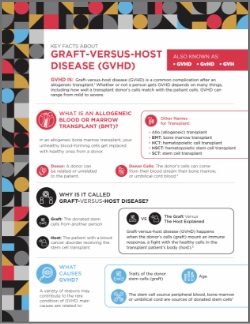
Graft-versus-host disease, or GVHD, is a condition that can happen after a bone marrow/stem cell transplant. Donor cells (the graft) that a person (the host) has received attack that person's organs and/or tissues. The donor cells do this because they mistake the host's organs and/or tissues as a threat.
Thousands of people are diagnosed with
GVHD each year in the United States alone.
But the number of lives impacted is immeasurable.
Sometimes GVHD symptoms affect so many organs that people can't live their lives the way they are used to. Even daily routines can be affected. In severe cases, GVHD can be life-threatening.
Choose an option below to learn more about the types and symptoms of GVHD.
There are 2 kinds of GVHD—acute GVHD (aGVHD) and chronic GVHD (cGVHD). People who receive bone marrow/stem cell transplants can develop either kind, or both.
Understanding the Types of GVHD Treatments
GVHD can be managed in several ways, and knowing your options can help guide care decisions. Always talk with your doctor about treatment options that may be right for you.
Lines of Treatment

Lines of Treatment
Immunosuppressive Therapies

Immunosuppressive Therapies
Targeted Therapies

Targeted Therapies
Blood-based or Procedural Treatments

Blood-based or Procedural Treatments
GVHD Treatment Resources

GVHD Treatment Resources
FIND RESOURCES FOR YOU
Here you can find resources from our Alliance members, including
Presentations
Videos
Downloads
Podcasts
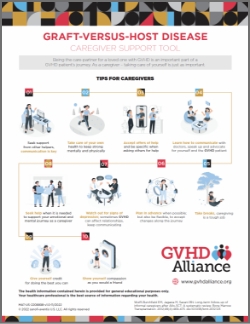
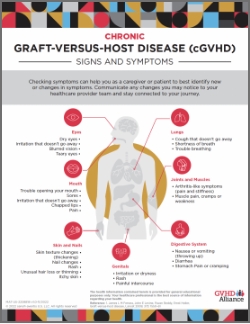
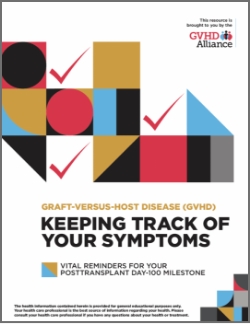
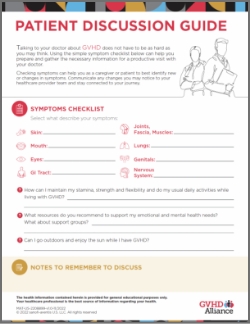
These resources can help you understand the risk of GVHD, recognize the symptoms of GVHD earlier, and optimize discussions with health care teams.
RESOURCES FOR GVHD ADVOCATES
Do you want to help the GVHD community? These tools were created for you to share with others and help get the word out on social media. Thank you for getting involved!
English
Español
English
Español
English
Español
English
Español
English
Español
English
Spanish version coming soon!
English
Español
February 17 is GVHD Day!
Help raise awareness of the signs and symptoms by using our sample messages and posts on your social media accounts.English

Español
English
Español
English
Español
English
Español
English
Español
English
Spanish version coming soon!
English
Español
February 17 is GVHD Day!
Help raise awareness of the signs and symptoms by using our sample messages and posts on your social media accounts.Posttransplant Care Guide
See the most recent recommendations for posttransplant care.